
Gaudí’s Death in La Vanguardia: How Barcelona Said Goodbye to Its Misunderstood Genius
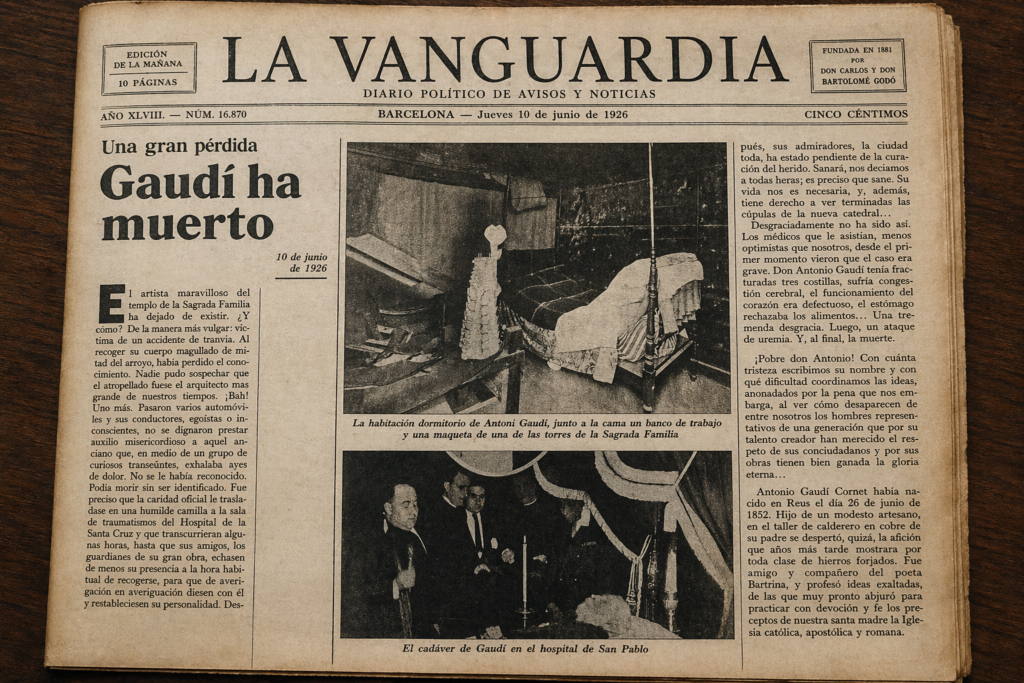
Few figures represent Barcelona as powerfully as Antoni Gaudí. His architecture transformed the city and projected its image around the world, yet the way he was perceived during his lifetime was not always the same admiration he inspires today. Looking back at an old report published in La Vanguardia* after his death in June 1926, we find a moving portrait of how Barcelona mourned one of its most extraordinary sons.
A Tragic and Deeply Symbolic Death
The article describes the tram accident that fatally injured Gaudí. What is most striking is not only the accident itself, but that no one recognized him at first. His humble, austere, almost ascetic appearance led people to mistake him for an ordinary elderly man. He was taken unidentified to the hospital, and only hours later was it discovered that the injured man was the creator of the Sagrada Família.
That detail says a great deal about Gaudí as a person—and about Barcelona at the time. The man building the city’s most ambitious monument walked through the streets as an anonymous figure.
How Barcelona Saw Gaudí in 1926
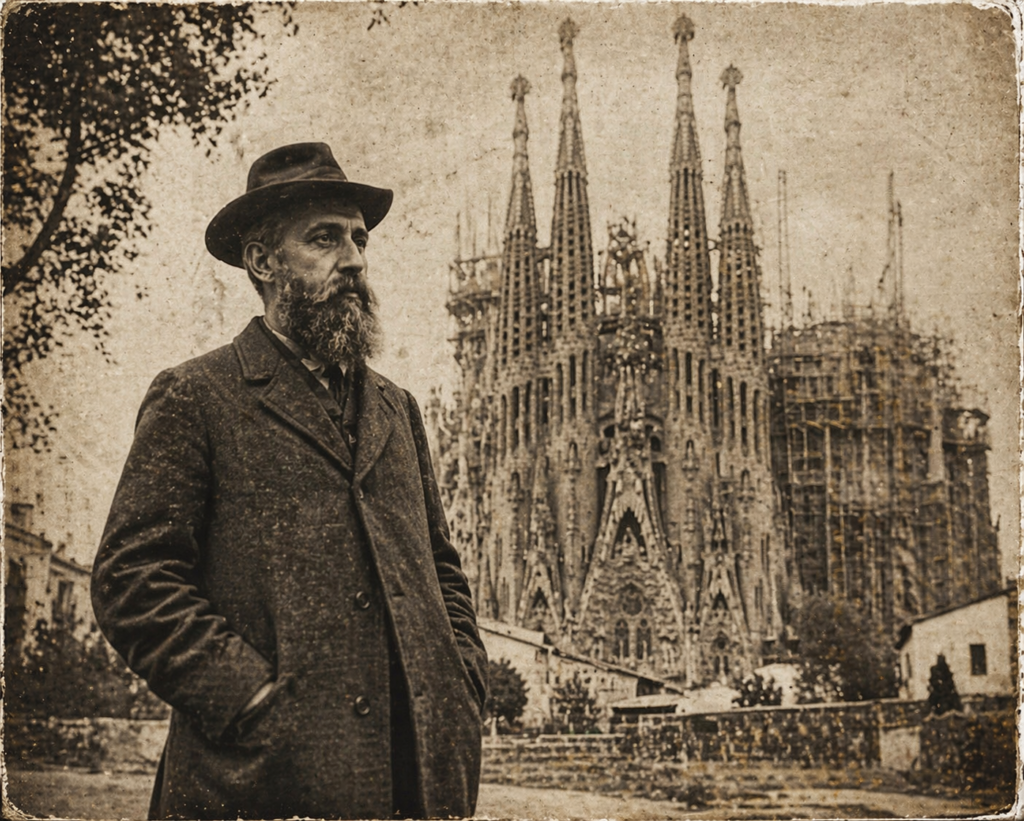
The tone of the article is revealing. La Vanguardia describes him as a “marvelous artist,” an exceptional man whose loss left a monumental work unfinished. It does not speak only of an architect, but of an almost spiritual figure, someone entirely devoted to a mission.
The portrait that emerges is of a man who was:
- Brilliant and visionary, creator of an architecture unlike anything seen before.
- Deeply religious, devoted to the Sagrada Família as if it were a sacred calling.
- Humble and austere, distant from luxury and fame.
- Difficult to categorize, admired by many yet still misunderstood by some of his contemporaries.
This is important: today Gaudí is universally celebrated. In 1926, that was not entirely the case. He was already famous, certainly, but to some in Barcelona he remained an eccentric figure. His style broke conventions, and his private, reserved nature only added to his aura of mystery.
A City Realizes What It Has Lost
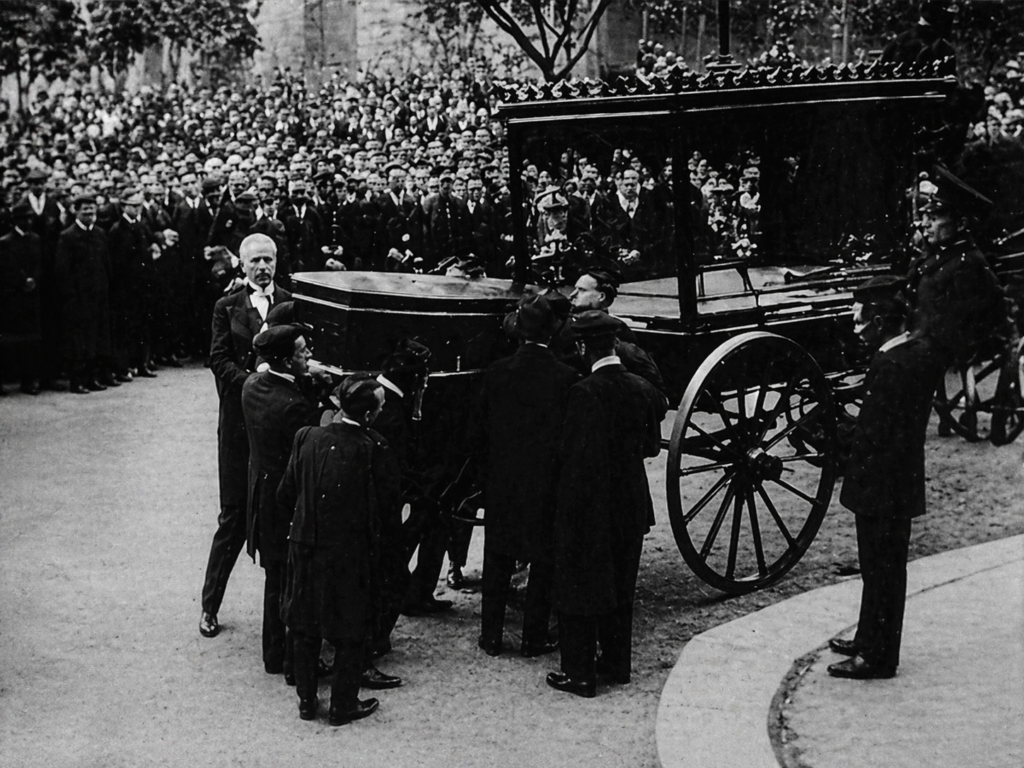
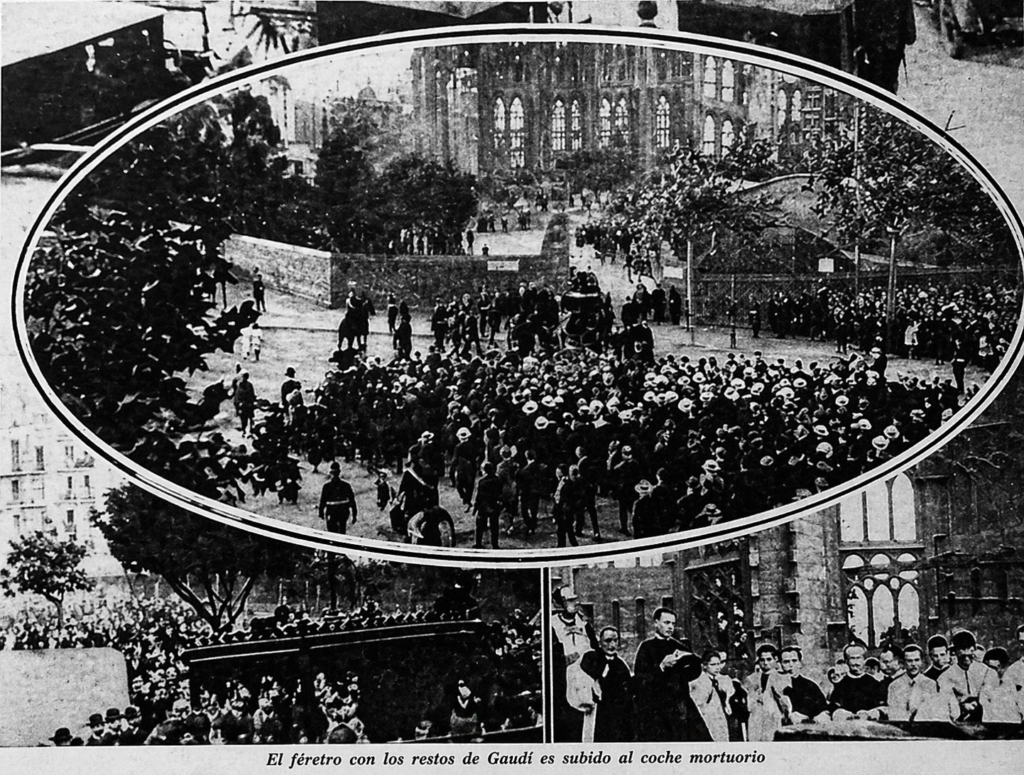
There is a sense of collective emotion throughout the report. La Vanguardia conveys that Barcelona understood—perhaps too late—the magnitude of its loss. The large funeral procession and the solemn language of the article show that the city felt it had lost not just an architect, but a symbol.
This often happens with great creators: in life they provoke debate; in death they become shared heritage.
Gaudí and the Eternal Barcelona
Reading that article today is like stepping into a very different Barcelona: trams running through the streets, a bourgeois city in expansion, and the Sagrada Família still far from completion. Yet it also reminds us of something unchanged: Gaudí remains the creative soul of Barcelona.
At Barcelona Retro Tours, we love uncovering these historical moments that help explain the city beyond the postcards. Because Barcelona is not defined only by its buildings but also by how it lived, admired, and mourned those who transformed it.
And in June 1926, Barcelona mourned Gaudí.
Barcelona Retro Tours: Walking Through History
When we walk through the Eixample, Gràcia, or stand before the Sagrada Família, we are not only looking at stone and ceramic. We are seeing the legacy of a man who was ignored on a street corner and honored as a giant only days later.
That is Barcelona: contradictory, intense, sometimes late in recognizing greatness—but forever capable of honoring its geniuses.
NOTE: *La Vanguardia is Barcelona’s most historic and influential newspaper, founded in 1881 and still published today. For generations, it has been one of Spain’s leading daily papers and an important voice in Catalonia, documenting the political, social, and cultural life of Barcelona. Its archives offer a remarkable window into the city’s past, capturing major events, everyday life, and the evolution of Barcelona over more than a century.