
The Day the World Fair Changed Barcelona Forever: The 1929 International Exposition
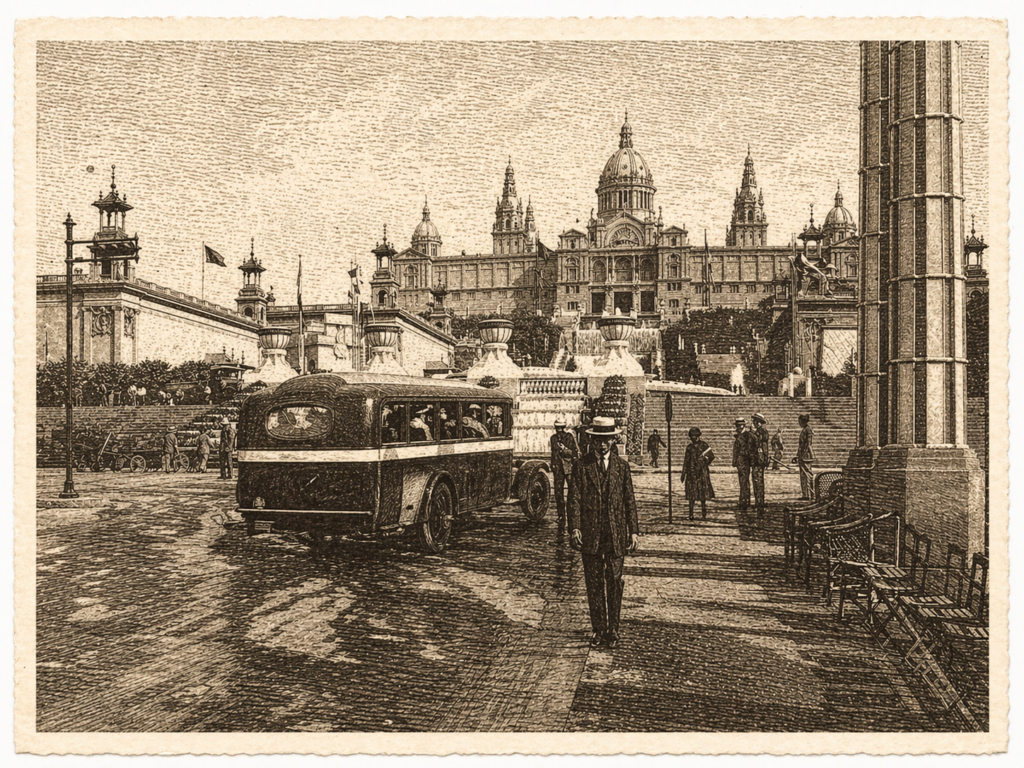
Barcelona has reinvented itself many times, but few events transformed the city as dramatically as the 1929 International Exposition. Long before the Olympic Games of 1992, this was the moment Barcelona announced itself as a modern, ambitious European city.
Looking through original pages published in La Vanguardia, we can feel the excitement of that historic year. The newspaper describes a city preparing itself for the world—full of construction, ceremony, optimism, and civic pride.
Barcelona Under Construction
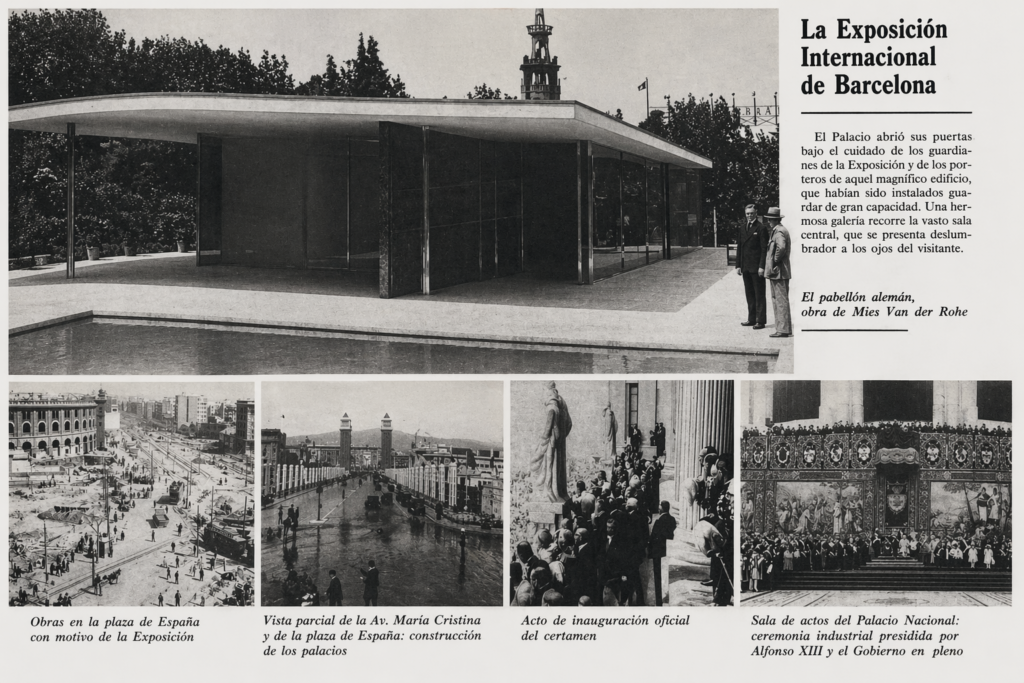
The images published at the time show a city in rapid transformation. Entire areas around Plaça d’Espanya, Avinguda Maria Cristina, and Montjuïc were redesigned to host the fair.
What had once been an underdeveloped hillside became a monumental showcase of architecture, fountains, gardens, and grand avenues. La Vanguardia presents these works not as disruption, but as progress—a city building its future in real time.
The article captures a Barcelona eager to impress visitors and prove itself on the international stage.
The Birth of Modern Montjuïc
Much of the Barcelona we know today was shaped by the Exposition. Among the landmarks created or completed for the event were:
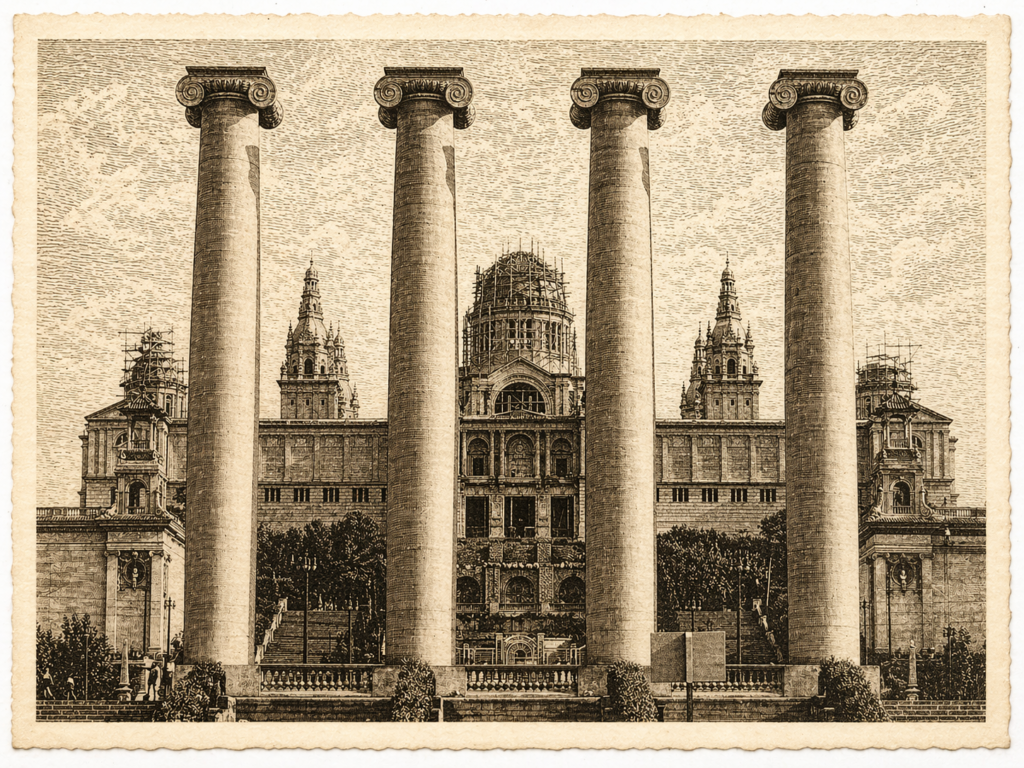
- Palau Nacional (today home to the MNAC museum)
- Plaça d’Espanya as a grand gateway to the fairgrounds
- Avinguda Maria Cristina and its ceremonial axis
- The Magic Fountain area
- Poble Espanyol, built as a celebration of Spanish regional architecture
- Exhibition pavilions from countries around the world
Without 1929, Montjuïc would not be the cultural and civic landmark it is today.
A City Full of Confidence
The tone of La Vanguardia is unmistakable: this was more than an exhibition—it was a declaration of confidence.
Barcelona is described as energetic, elegant, and prepared to welcome the world. Crowds filled the avenues, dignitaries arrived, new technology was displayed, and the city embraced the spirit of modernity.
For local residents, this was not just an event to attend. It was proof that Barcelona belonged among Europe’s great cities.
The Famous German Pavilion
One of the most celebrated creations of the fair was the German Pavilion, designed by Ludwig Mies van der Rohe. Minimalist, elegant, and radically modern, it shocked many visitors at the time.
Today it is considered one of the most important works of 20th-century architecture, but in 1929 it represented something daring and new: the future.
Barcelona has always had that tension between tradition and innovation—and this pavilion symbolized it perfectly.
The Legacy Still Visible Today
Unlike many world fairs whose structures disappeared, the legacy of 1929 remains everywhere.
Walk through Montjuïc today and you are still moving through the vision created for the Exposition. The grand stairways, plazas, fountains, and palaces continue to define one of Barcelona’s most iconic landscapes.
The fair ended, but it permanently changed the city.
Barcelona Retro Tours: Walking Through the 1929 Dream
At Barcelona Retro Tours, we love uncovering the moments when the city reinvented itself. The 1929 International Exposition was one of those turning points—a moment when Barcelona stepped forward and said: look at what we can become.
And nearly a century later, the city is still living inside that transformation.
NOTE: *La Vanguardia is Barcelona’s most historic and influential newspaper, founded in 1881 and still published today. For generations, it has been one of Spain’s leading daily papers and an important voice in Catalonia, documenting the political, social, and cultural life of Barcelona. Its archives offer a remarkable window into the city’s past, capturing major events, everyday life, and the evolution of Barcelona over more than a century.